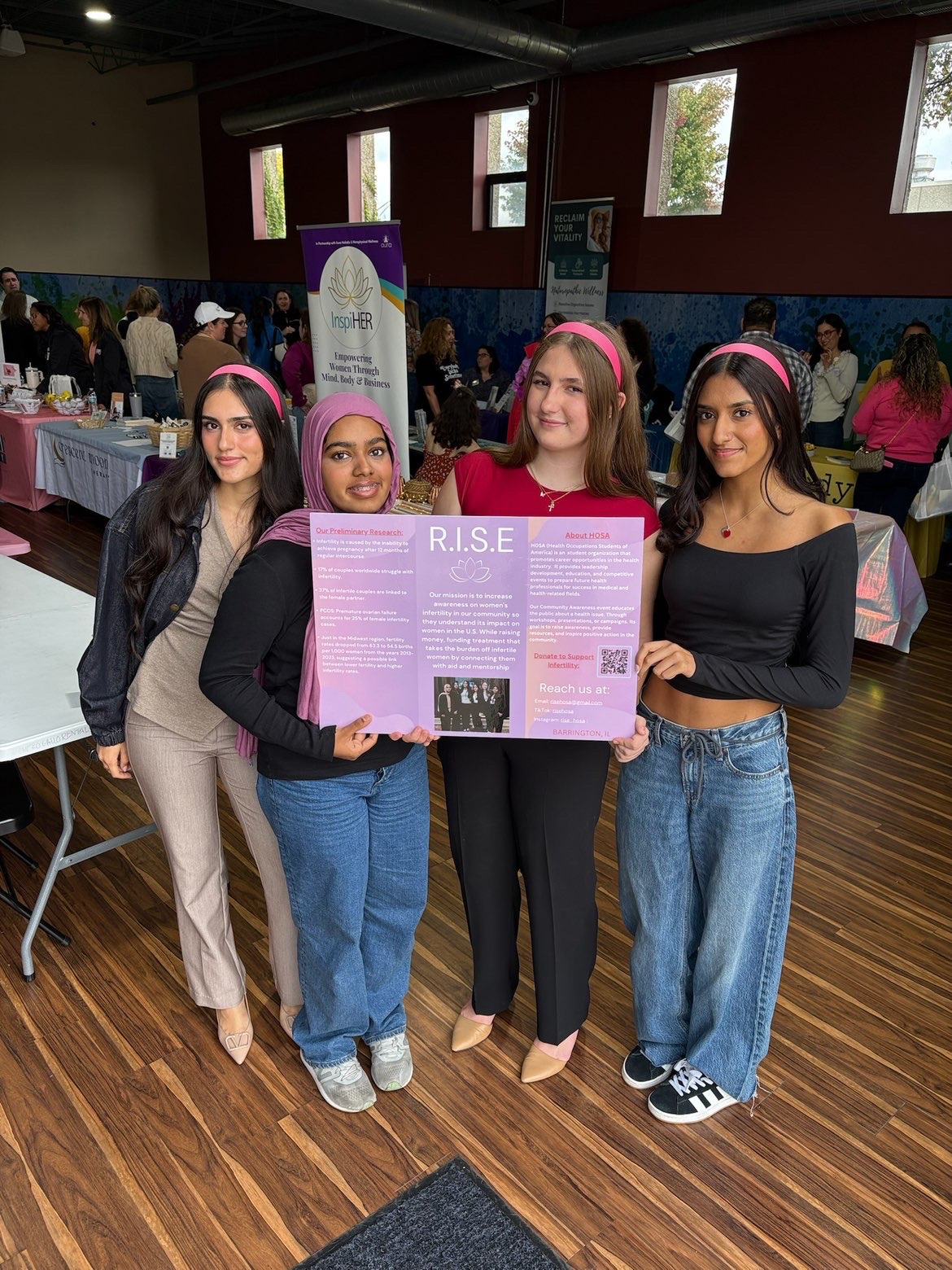
Juniors Ilhaam Naseeruddin, Inayah Mohammed, Abby Betz and Ashni Patel (left to right) spread awareness about RISE and their mission. RISE attended the Pineapple Squad Infertility Resource Fair, where they interacted with other infertility organizations and continued their goal of awareness and education. Photo courtesy of Inayah Mohammed, ‘27.
Infertility affects millions of women worldwide. But for most, it doesn’t become a concern until adulthood. Junior Abby Betz, however, first encountered that word at a young age. As a child, she saw her aunt struggling with infertility due to her battle against cancer.
“My aunt was going through chemotherapy to fight her cancer. After she went through treatment, she had issues with having kids. When she tried having a child, she ended up having a miscarriage and became infertile. For women who went through chemo like her, it’s much more likely for them to become infertile,” Betz said.
Betz’s situation isn’t exactly unique. According to the CDC, approximately 9.7 million women under the age of 50 in the U.S. are affected by infertility. By recognizing the widespread impact infertility has on women through her aunt’s battle, Betz knew more should be done to educate others, especially teenagers, on the issue.
women under the age of 50 battle with infertility in the U.S.
≈0
At school, she is a member of HOSA (Healthcare Occupational Students of America), where she and a group of students are participating in the Community Awareness event. Betz along with juniors Divija Ram, Ashni Patel, Ilhaam Naseeruddin, Isra Shamsuddin and Inayah Mohammed created RISE (Resilience in Infertility & Empowerment), a group focused on specifically teaching students about infertility and its misconceptions, as well as providing support to those who deal with its implications.
“We chose this because it’s not talked about nearly enough, especially among teenagers, which is when it’s most important. It’s misunderstood and there’s a lot of unnecessary stigma around it,” Betz said.
Her group competes with other groups across the state to earn a spot at their state competition in March. However, HOSA doesn’t supply groups with materials or funding, just limited directions and a few deadlines. This makes the event open to many topics and directions, leaving groups campaigning however they see most fit.
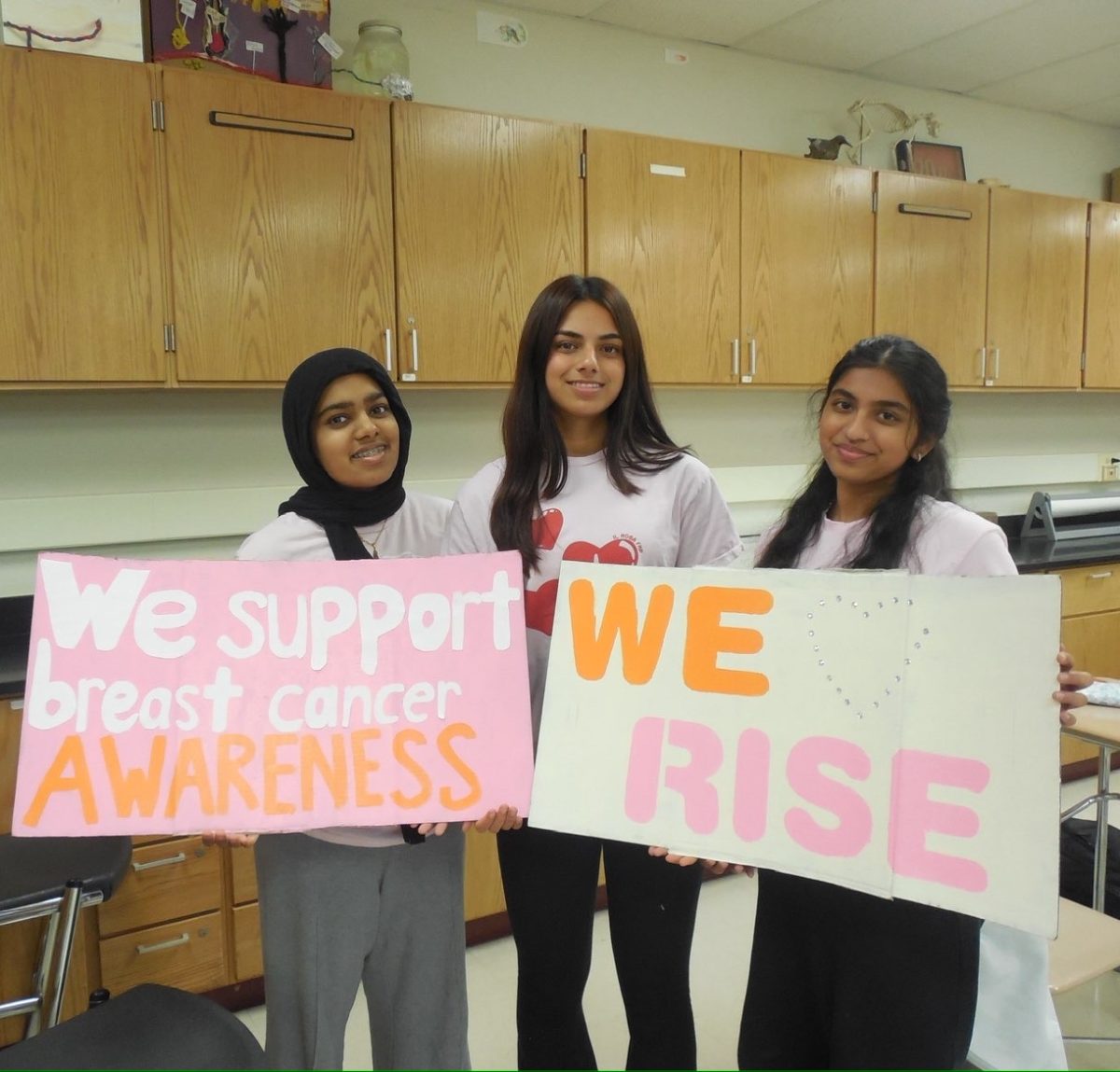
Juniors Inayah Mohammed, Isra Shamsuddin and Divija Ram (left to right) hold signs promoting RISE. During October, they campaigned with signs around the school for Breast Cancer Awareness Month, as well as still focusing on their main goal of women’s infertility awareness. Photo courtesy of Inayah Mohammed, ‘27.
.“It’s all up to us to pick the topic, which is nice because it gives us more possibilities on what we want to do. Although, that means we don’t get any help or resources from them. So, we’ve been working toward raising money and getting grants in order to donate to different infertility support groups and clinics to help them however we can,” Betz said.
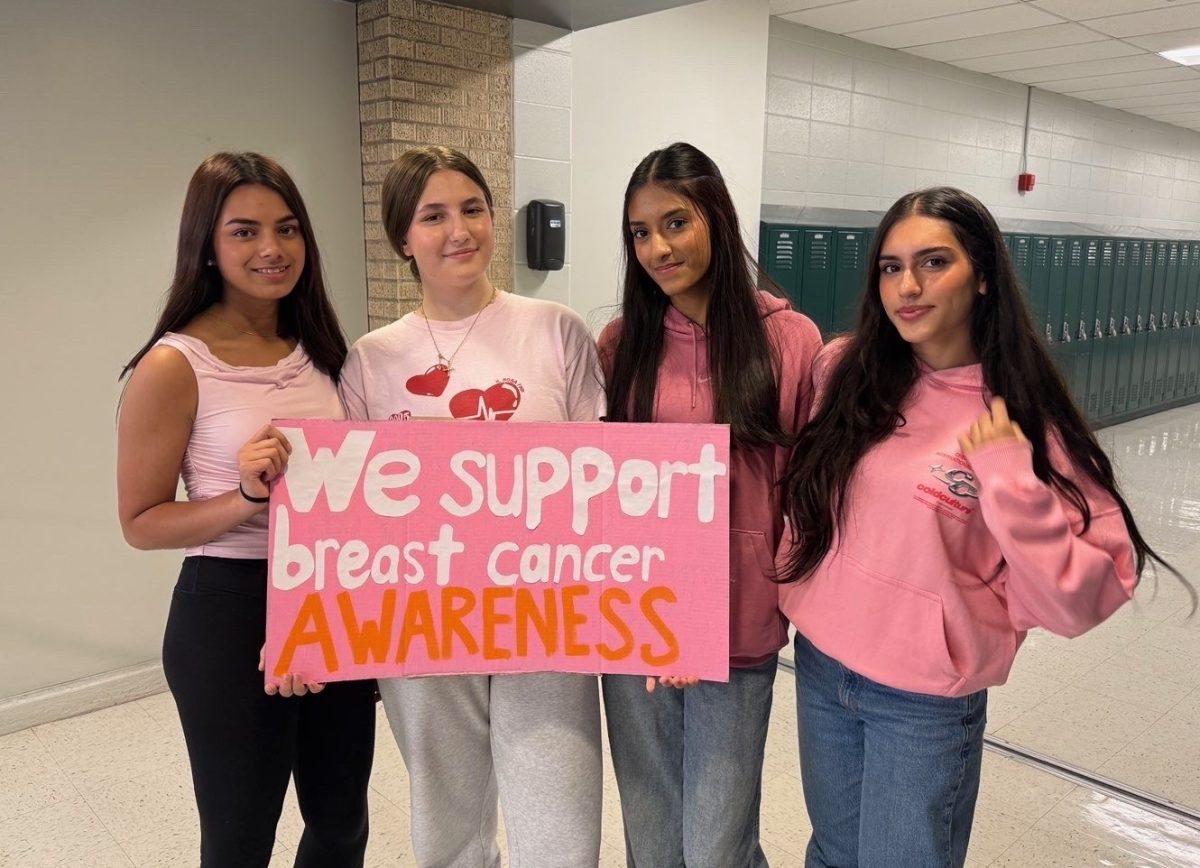
RISE actively educates students and the community through participating in infertility resource fairs, collaborating with BHRA (Barrington Healthcare Research Association) and campaigning for Breast Cancer Awareness Month, where they explained the medical connection between cancer and infertility. Additionally, they regularly post educational content on their Instagram to help students learn more information and facts.
RISE is trying to change student’s perspective on infertility, highlighting the importance of learning about health issues in advance to know how to prevent it in the future.
“At our age, we might not even be aware that us or someone we know could be struggling with this issue”, Betz said. “For many, when they’re diagnosed, it can be a devastating, life-changing piece of information. But, if we learn about infertility early, we can change how we think about it.”
Juniors Isra Shamsuddin, Abby Betz, Ashni Patel and Ilhaam Naseeruddin (left to right) promote Breast Cancer Awareness Month during October. RISE’s main goal of infertility awareness is closely related to breast cancer, as there’s a medical connection between the two explained in their campaign, which students can keep up with via their Instagram. Photo courtesy of Inayah Mohammed, ‘27.
Your donation will support the student journalists at Barrington High School! Your contribution will allow us to produce our publication and cover our annual website hosting costs.
Donate to The RoundUp
$310
$500
Contributed
Our Goal
Submitting donation...
Thank you for your donation! You are helping us continue reporting to our community, and we truly appreciate it! To inquire about our patron program or magazine ads, contact: [email protected]!
There was an issue submitting your request.
Comments (0)
Comments are strongly recommended, but please remain appropriate and relevant. Thank you!