

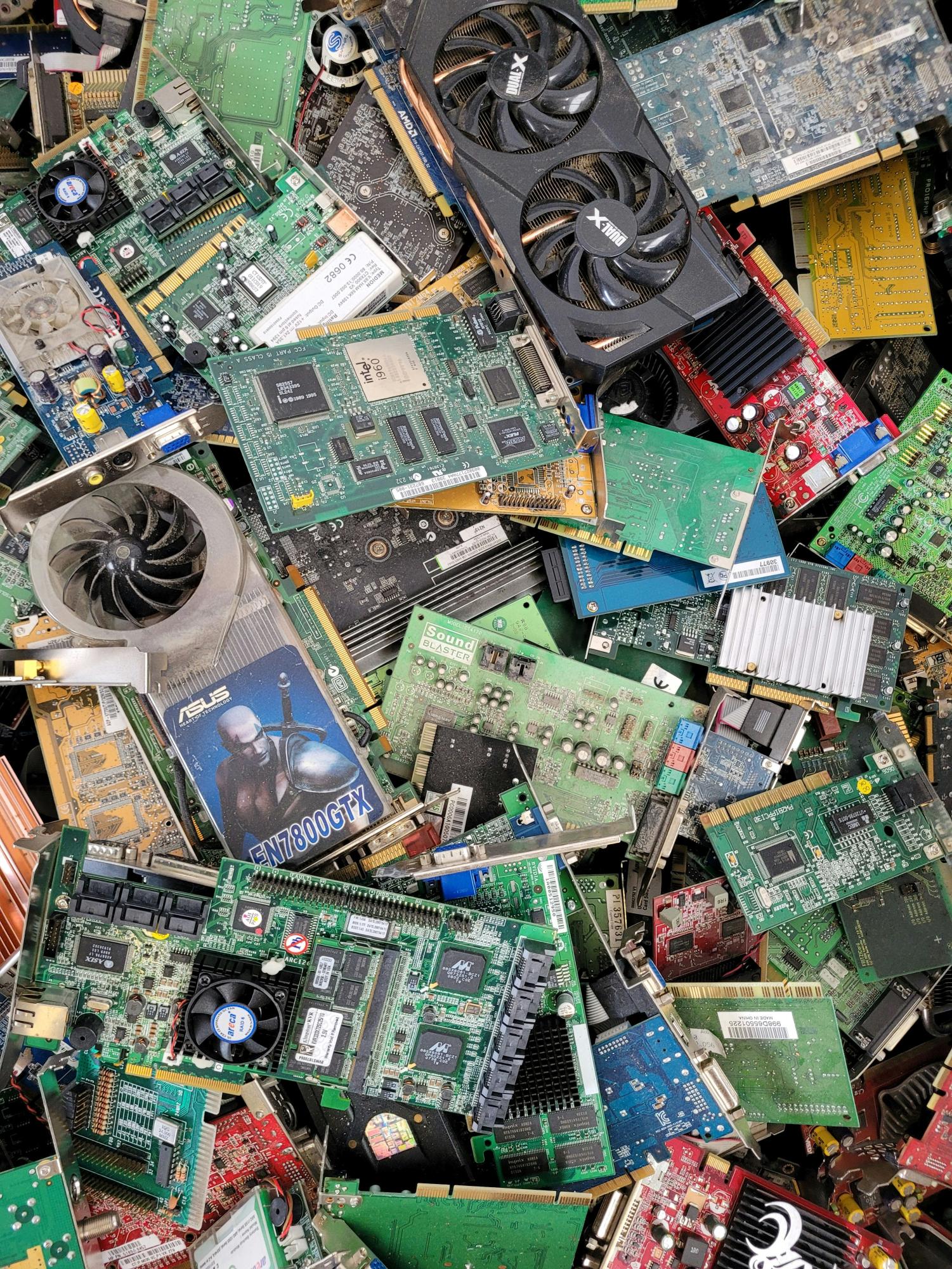
According to the United Nations Institute for Training and Research, “A record 62 million tonnes (Mt) of e-waste [electronic waste] was produced in 2022,” which equates to roughly seventeen pounds of e-waste per person every single year. If you aren’t aware of what e-waste is, it’s when any type of technology is discarded due to it either being old or just not wanted anymore. E-waste has been increasing very rapidly over the past few years due to factors such as increased use of artificial intelligence (AI) and how companies’ selling techniques when it comes to technology. This rapidly growing amount of e-waste is having harmful effects on the environment. People need to start being more conscious about their e-waste and begin to limit the amount of e-waste that is produced by them.
In today’s day and age, we hear about all the harmful things humans do to the environment. However, e-waste can get a bit overlooked despite it being extremely harmful. According to the World Health Organization, “E-waste is one of the fastest growing solid waste streams in the world.” They further explain that “Only 22.3% was documented as formally collected and recycled.” This sheer amount of wasted technology that is just sitting in landfills, releasing toxic chemicals into the environment should be extremely alarming for everyone. Imagine walking around and seeing mountains of useless technology that is doing nothing but harm in your own neighborhood. Many companies are to blame for this, as new technologies, such as iPhones, are released every year, causing people to discard their own technology way too frequently.
The new age of technology is on its way, and it is all about AI. I am sure everyone is very familiar with AI and uses it very frequently. But what people don’t realize is how much it is becoming a factor in e-waste. According to Casey Crownhart, a senior climate reporter at MIT Technology Review, “AI, the technology could add 1.2 million to five million metric tons of e-waste by 2030.” No one suspects AI to be contributing this much to e-waste, as no normal person is discarding their technology as a result of it. However, large companies that use AI are discarding technology used in older models on a daily basis.
Despite being relatively new in the grand scheme of things, e-waste has already had some instances of jeopardizing the health of citizens. According to the National Library of Medicine, “The primitive e-waste recycling activities may contribute to the elevated BLLs in children living in Guiyu.” This can, in turn, cause severe health issues such as developmental issues and cancer. E-waste having this detrimental of an effect on human health is very concerning, especially when numbers are expected to increase even more rapidly. That could mean there will be more instances of the contamination in Guiyu—maybe even in your own city.
Many people claim that trying to limit e-waste could harm the economy by causing companies to reduce technology production that would later be sold to consumers. However, the guaranteed worsening of health of the people far outweighs potential minimal effects on the economy. To limit the frequency at which people discard their electronics, companies should be restricted in relation to how much new technology they are allowed to release each year. Citizens also need to keep an eye on their own e-waste as well, because if we don’t make a change soon, our Earth might end up looking like the one from WALL-E.