
















































Barrington High School athletes have a history of success, but not everyone knows what student athletes truly go through. One of the biggest negatives of being a student athlete is the injuries that come with it. According to the American Academy of Orthopaedic Surgeons, up to 20.9 percent of sports-related injuries have resulted in a season-ending or career-ending medical disqualification. And, according to the National Library of Medicine, approximately 90 percent of student-athletes report sustaining an injury while participating in sports.
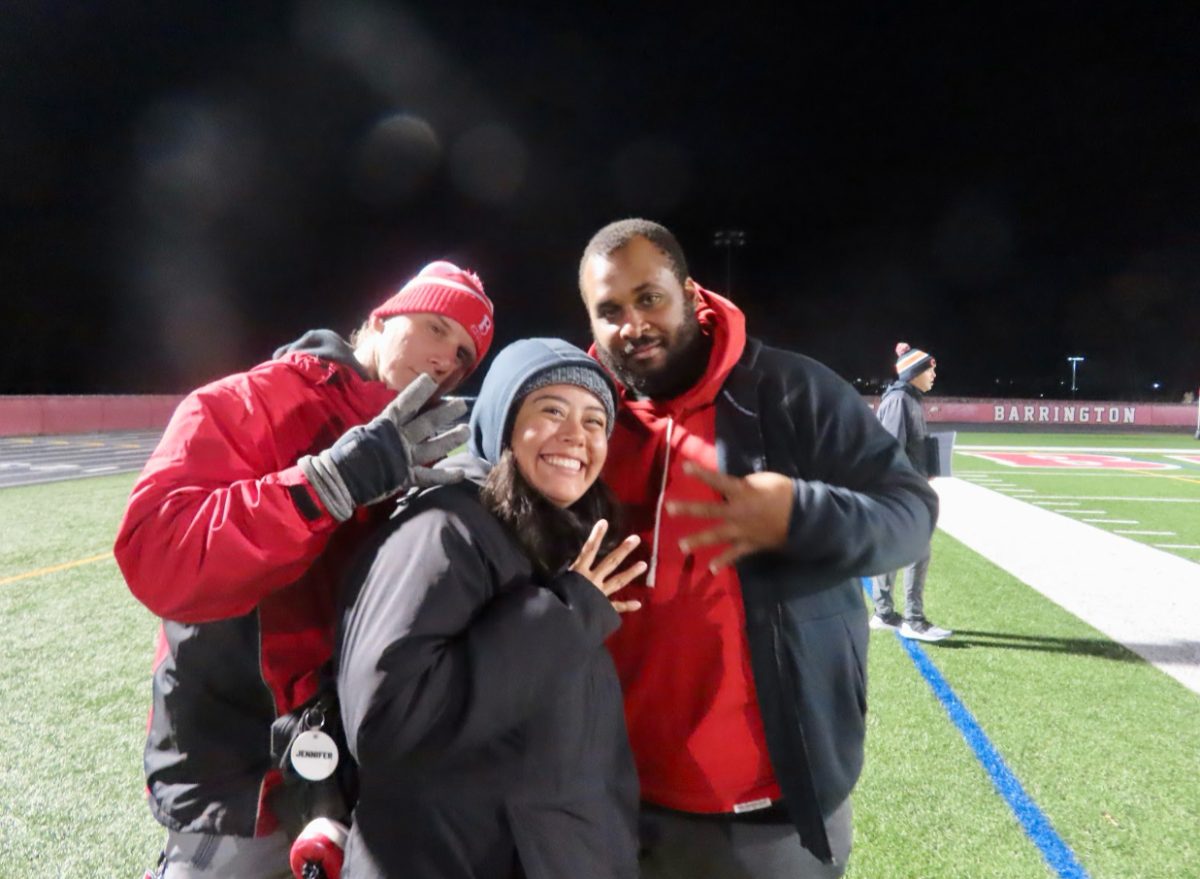
Athletic trainer Jennifer Quintas works with students who fall into these percent ranges, dealing with a variety of injuries.
“Some of the most common injuries I’ve encountered include sprained ankles, head injuries, sprained or ‘jammed’ fingers, and strained muscles to name a few,” Quintas said.
Her job is to deal with the physical toll of injuries but she also acknowledges the mental side.
“Mentally, recovery can be just as demanding. It can be frustrating for student-athletes to be unable to perform at their usual level or to be sidelined completely until their pain improves. The mental aspect plays a significant role in recovery and overall well-being,” Quintas said.
Quintas also notes the extremes can go to. Not only in an athlete’s own head, but with their social life.
“It’s common for student-athletes to experience frustration, anxiety, or even depression following an injury. Many friendships are built through sports, and being unable to participate with teammates can be mentally and emotionally draining,” Quintas said.
Although it may feel like it, an injury doesn’t have to be the end of an athlete’s career. There are ways to both heal and prevent these injuries. Preventing can be just as simple as a five minute routine before a practice.
“Regular stretching, strengthening, and targeted rehab exercises before and after an injury can help prevent future issues. Consistent maintenance and attention to proper technique are key to reducing the risk of re-injury,” Quintas said.
There are also many crucial steps of recovery athletes often tend to overlook. The drive to improve performance can outweigh the focus on recovery. But, an injury could be holding an athlete back which makes recovery even more important.
“Our goal as the BHS Athletic Trainers is to treat, rehabilitate, and prevent injuries. Rehabilitation before, during, and after an injury is crucial. It helps manage pain, strengthens the affected area, and rebuilds confidence in movement. Recovery doesn’t end when the pain subsides—continued rehab and conditioning help athletes regain trust in their bodies and improve long-term performance,” Quintas said.
In the end, sports injuries can be a real struggle for BHS athletes but they don’t have to stop progress. As trainer Quintas explains, recovery takes both physical and mental strength. She states with good habits like stretching, proper technique and sticking to rehab, athletes can get back to doing what they love.